In recent years, the world of education has changed faster than ever.
Generation Z students—those born between 1997 and 2012—have grown up in a digital, fast-paced, and interconnected world.
For many teachers, building an authentic connection with Gen Z students means completely rethinking how they communicate, teach, and relate.
According to a Pew Research report (2024), more than 70% of young people aged 14 to 22 believe that “a good teacher is first and foremost someone who listens and understands.”
Empathetic competence is therefore just as important as linguistic or subject-specific skills.
1. Communicating with empathy: the key to connection
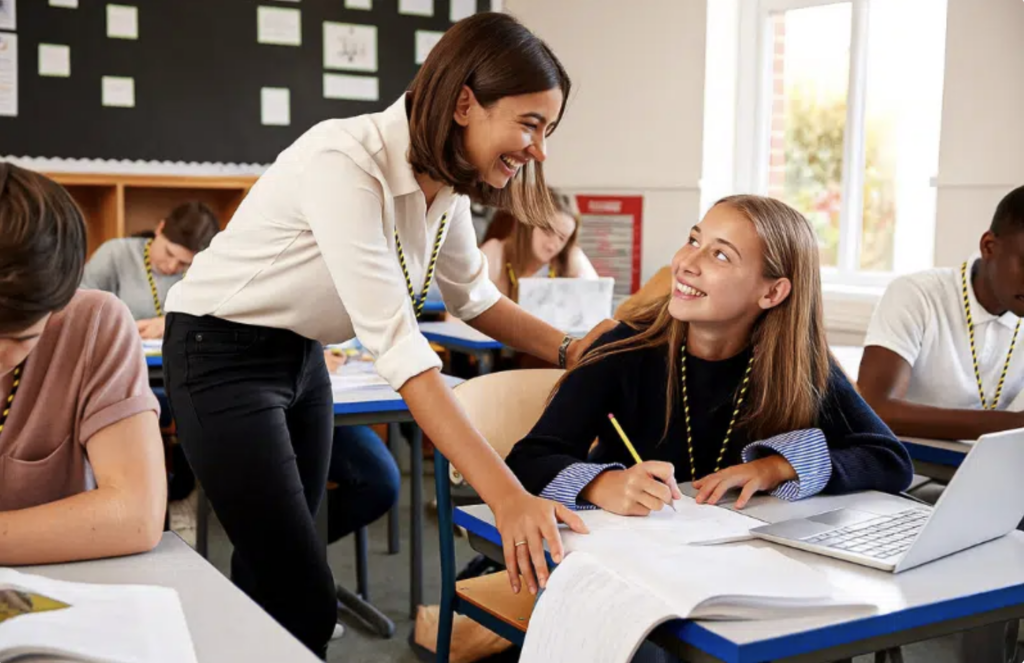
To create a genuine relationship between teachers and Gen Z students, it’s not enough to simply deliver content—active listening is essential.
Teachers who adopt an open, empathetic, and dialogic communication style foster an atmosphere of trust.
This doesn’t mean giving up authority, but rather transforming it into relational authority—the kind that grows from mutual respect and the ability to understand students’ perspectives.
At MLA, empathy lies at the heart of their teaching methods: in the MLA Inclusive Teaching courses, educators learn to interpret students’ emotional and communicative signals to adapt their language and approach in real time.
2. Speaking the digital language (without losing authenticity)
Generation Z lives online.
They use memes to communicate emotions, short videos to express ideas, and chats to collaborate.
But this doesn’t mean teachers should “imitate” them—it means understanding their language and integrating their tools into the learning context.
Creating digital school communities—on closed, safe, and collaborative platforms—helps maintain contact even outside the classroom.
Forums, interactive boards, or discussion groups stimulate participation and transform the class into a small network of shared learning.
A great example comes directly from MLA, which in its pre-departure online courses uses moderated digital environments where students and teachers interact naturally and respectfully, often with tutors connected from around the world.
It’s a phygital dimension, where technology and human connection intertwine to foster real relationships, even at a distance.
3. From the classroom to the community: the teacher’s new role
Today, a teacher is no longer just a content provider but a facilitator of experiences.
Connecting with Gen Z students means creating a space where everyone can express themselves, contribute, and feel part of a community.
Some practical strategies include:
-
Involving students in creating content (presentations, quizzes, videos) to increase active participation.
-
Incorporating real-world experiences into lessons, such as simulations of everyday situations or projects linked to current events.
-
Encouraging collaboration over competition: Gen Z students love teamwork, sharing ideas, and building together.
According to McKinsey Education (2024), 68% of Gen Z students prefer a project-based, collaborative learning approach because it “makes them feel part of something.”
4. Building trust and continuity
The connection between teachers and Gen Z students grows over time through consistency and transparency.
Being authentic—even admitting doubts or mistakes—builds trust.
Teachers who show their human side are perceived as more approachable and inspire deeper engagement.
Projects like MLA Study Holidays strengthen this bond: teachers and students share real-life experiences, exploring cultures, languages, and values in authentic contexts.
This is where the school community transforms into a network of people connected through emotion and mutual growth.
Conclusion
Creating an authentic connection with Generation Z isn’t about age—it’s about relational intelligence.
Those who can combine empathy, active listening, and digital fluency will build a bridge between school and the real world—turning every classroom into a vibrant, inclusive learning community.