
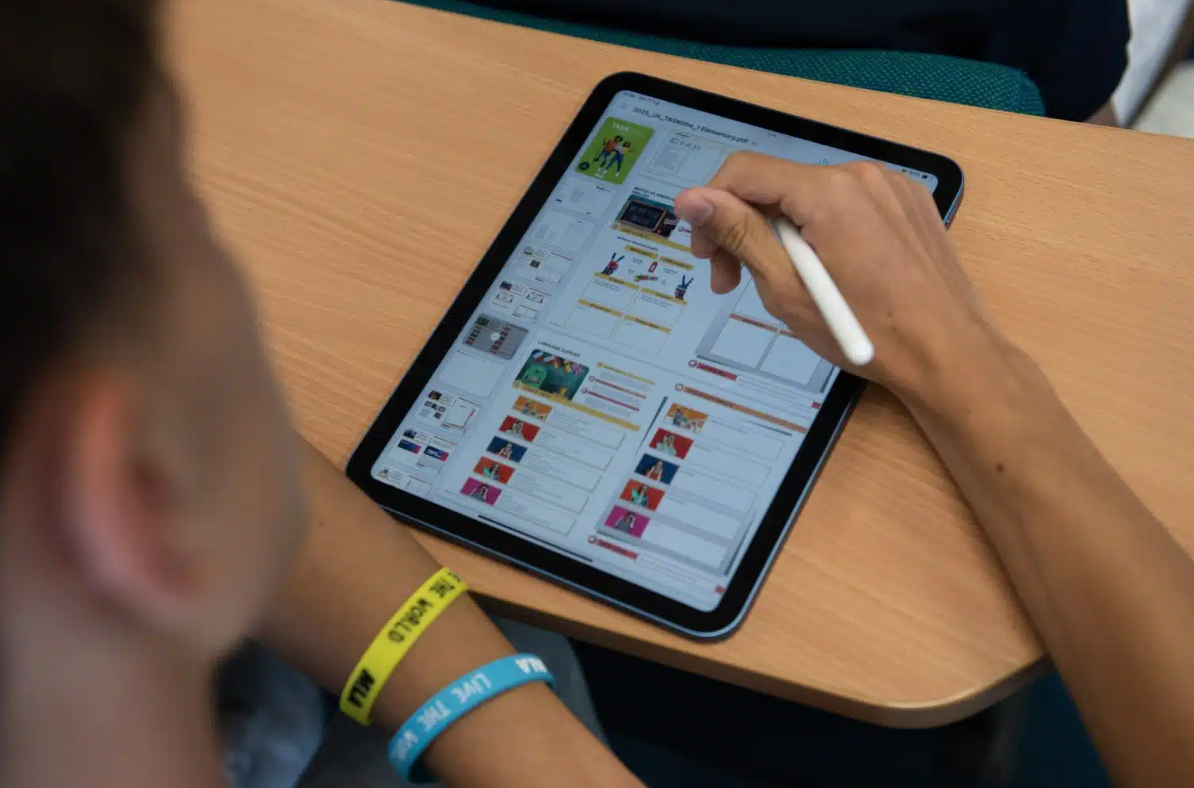
In recent years, learning English using artificial intelligence has become one of the leading trends in language education.
From apps with virtual tutors to augmented reality courses, AI is changing the way we learn and teach languages. But which tools really work for those who want to improve their English skills?
-
AI apps for personalized English learning
Today, AI-powered apps allow learners to study English in a dynamic and adaptive way.
Platforms such as Duolingo Max or ELSA Speak analyze learners’ progress and adjust difficulty levels in real time.
Voice feedback, contextual grammar, and personalized suggestions make learning more natural and continuous.
For students returning from an MLA World study vacation, these tools are ideal for keeping the language alive even after coming home.
-
Virtual tutors to practice English 24/7
Another major advantage of learning English with artificial intelligence is the ability to practice conversation with advanced language chatbots.
Tools like ChatGPT Tutor or Speak AI allow learners to practice both spoken and written English with a “virtual teacher” available 24/7.
These solutions help overcome shyness and improve speaking skills, even for those who don’t always have time to attend in-person classes.
-
Augmented reality: learning English through real-life experiences
Augmented reality (AR) and virtual reality (VR) represent the new frontier of learning English with artificial intelligence.
Apps such as Mondly VR or Immerse allow learners to experience everyday situations—ordering food at a restaurant, asking for directions, or shopping—in realistic digital environments.
According to a 2024 HolonIQ study, over 65% of Gen Z students believe immersive learning makes it easier to remember vocabulary and grammatical structures.
-
AI and hybrid teaching: supporting educators
AI is not only for students—teachers can also learn and teach English more effectively with artificial intelligence.
Many educators already use AI tools to create personalized exercises, adaptive quizzes, and language simulations.
MLA World, through its teacher training courses, integrates these technologies to make learning more inclusive and interactive.
However, the true strength of the MLA approach lies in combining digital innovation with human connection. During online pre-departure courses, students are not guided by virtual tutors, but by real teachers connected from all over the world.
This choice preserves empathy, interaction, and the relational aspect that no artificial intelligence can ever fully replicate.
It is how MLA ensures that technology remains a tool—not a replacement for human value in language education.
-
The future: learning English between AI and real experiences
The future of language education will be hybrid—a synergy between AI and human interaction.
Artificial intelligence provides personalized and continuous support, but only real-life experiences—such as an MLA study vacation abroad—allow learners to develop authentic skills, emotions, and spontaneity.
As EdTech Magazine points out, AI “enhances learning, but empathy and culture remain irreplaceable.”
MLA is living proof of this approach: technology is at the service of people, not the other way around.